
Nobody likes losing. Not kids, not adults, not coaches. But here’s the thing most parents don’t think about when they sign their child up for a sport: losing is one of the most valuable experiences a young athlete can have. And wrestling, more than almost any other sport, forces kids to confront it head-on.
In team sports, a loss gets spread across the roster. There’s always someone else to point to, a bad call to blame, or a teammate who didn’t show up. Wrestling doesn’t work that way. When a wrestler loses, it’s just them on the mat. That sounds harsh — and it is, at first. But it’s also the reason wrestling produces some of the most mentally tough, resilient young people you’ll ever meet.
There’s No Hiding on the Mat
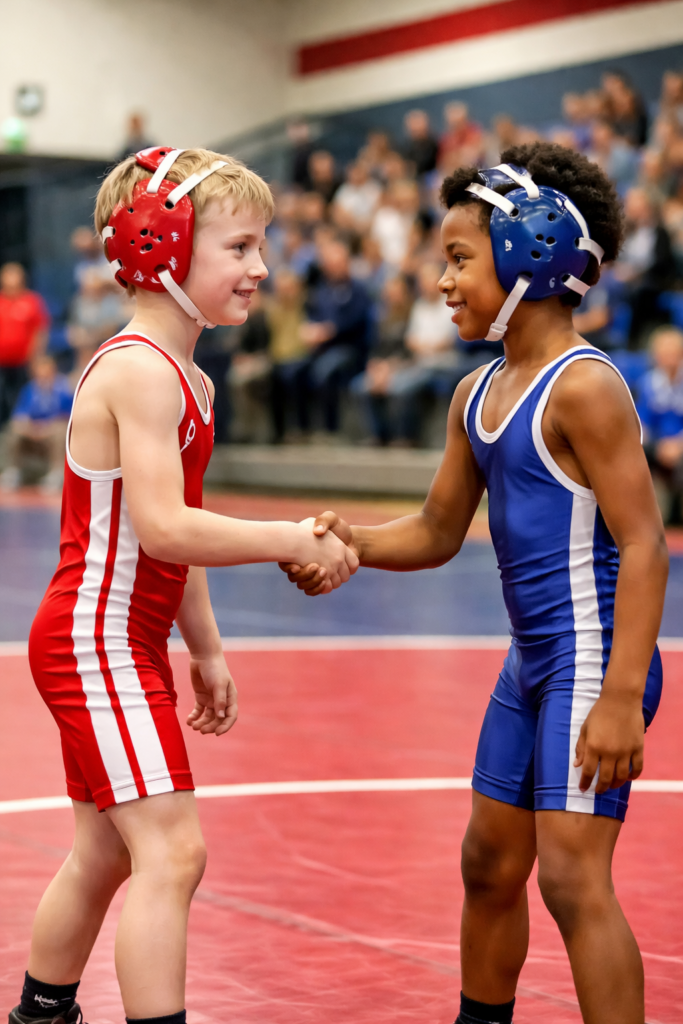
Wrestling is one of the few sports where every outcome is personal. Your child shakes hands with their opponent before and after the match. They compete one-on-one, with nothing between them and the result but their own preparation and effort.
That level of accountability is rare in youth sports. And while it can sting after a tough loss, it teaches kids something critical: the only person who can change the outcome next time is them. Not the ref, not the lineup, not the weather. Just them and the work they put in at practice.
At Shamrock Wrestling Club, we see this transformation happen every season. A kid who cried after their first loss in November is shaking it off and asking what they need to fix by February. That shift doesn’t happen by accident — it happens because wrestling demands it.
Losing Builds the Work Ethic That Winning Can’t
Winning feels great. But it doesn’t always teach much. Kids who win easily in youth sports often coast — they don’t develop the habits they’ll need when competition gets harder. Losing, on the other hand, creates a clear feedback loop: something didn’t work, and you need to figure out what.
In wrestling, a loss in a match usually points to a specific skill gap. Maybe their opponent hit a takedown they couldn’t defend. Maybe they got turned on the mat because their hips weren’t in the right position. These are concrete, fixable problems — not vague disappointments.
That’s one reason our youth wrestling program emphasizes drilling and technique over just “winning matches.” When kids learn to treat losses as information instead of failure, they start to develop a growth mindset that carries well beyond the wrestling room.
How Coaches Handle Losing Matters More Than You Think
The way a coach responds after a loss shapes how a young athlete processes it. If a coach screams or shames a kid, that loss becomes traumatic. If a coach ignores it and moves on, the kid never learns from it. The right approach sits in the middle — honest, direct, and focused on what comes next.
At Shamrock, our coaches walk kids through what happened in a match without sugarcoating it, but also without tearing them down. The conversation after a loss sounds like: “You got caught on that single leg because your sprawl was late. Let’s work on that Thursday.” It’s specific. It’s actionable. And it tells the kid that their coach believes they can get better.
That kind of coaching is what separates a good wrestling experience from a bad one. Our coaching staff has been through the highs and lows of competitive wrestling at the collegiate level. They know what it feels like to lose — and they know how to help young wrestlers process it in a healthy way.
Kids Who Learn to Lose Well Become Adults Who Handle Adversity
This is the part that matters long after your child hangs up their wrestling shoes. The ability to take a hit, get back up, and try again is not just a sports skill. It’s a life skill. Job interviews, college applications, relationships, careers — they all involve setbacks. The question is whether your child has the tools to handle them.
Wrestling gives kids those tools earlier than most activities. A 7-year-old who learns to shake hands after a loss, go back to the warm-up area, and start preparing for the next match is learning emotional regulation in real time. No lecture, no worksheet — just the lived experience of falling short and deciding to keep going.
That’s something that builds real confidence — not the kind that comes from participation trophies, but the kind that comes from knowing you’ve been knocked down and got back up.
What Parents Can Do to Help
If your child loses a match, the worst thing you can do is make it bigger than it is. Don’t dissect the match in the car ride home. Don’t compare them to the kid who won. And don’t tell them “it’s okay” in a way that signals you’re more upset than they are.
Instead, let your kid feel what they feel. Ask them if they’re hungry. Tell them you liked watching them compete. Save the technical talk for their coach — that’s the coach’s job, and stepping into it usually does more harm than good.
The parents who handle this well are the ones whose kids stick with wrestling the longest. And the kids who stick with it are the ones who benefit the most. Check out our FAQ page if you have questions about how we handle competition and development at Shamrock.
Wrestling Is Hard — That’s the Point
We’re not going to pretend wrestling is easy. It’s one of the most physically and mentally demanding sports a kid can do. But that’s exactly why it works. The difficulty is the mechanism. Kids don’t build resilience by doing easy things — they build it by doing hard things and surviving them.
Every kid who walks into our wrestling room in Somerset will lose at some point. The ones who come back the next day are the ones who grow. And most of them do come back — because they realize, maybe for the first time, that a loss didn’t break them. It just made them want to work harder.
If your child is ready to start building that kind of toughness, sign them up for a free session at Shamrock Wrestling Club. Our youth program runs Monday and Thursday evenings from 5:30 to 6:30 PM, with Saturday sessions from 10:00 AM to noon. Come see what real wrestling culture looks like — and what it can do for your kid.