

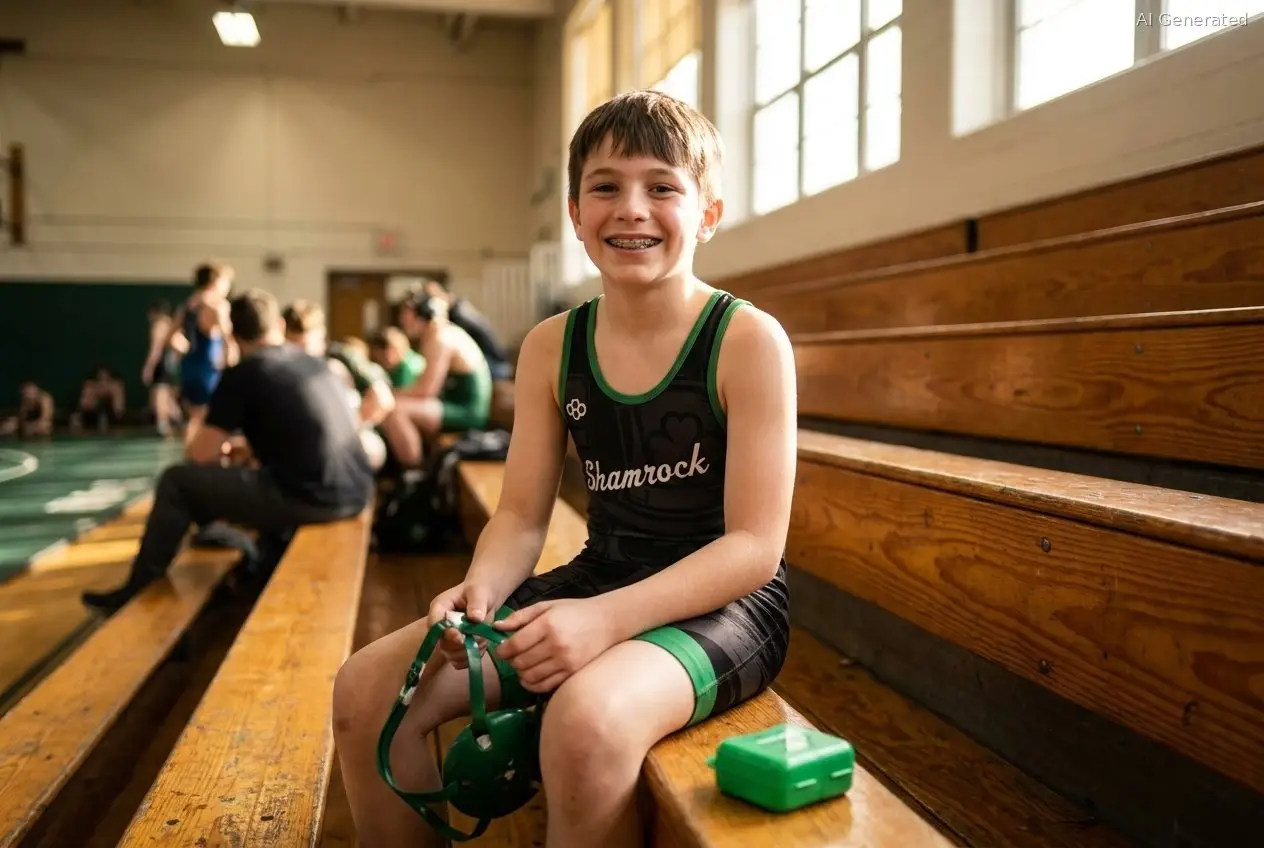
A quick note on the photos: some images in this article are AI-generated and marked “AI Generated” in the corner. We use them to illustrate what we’re describing — so if something in a picture looks slightly off, that’s why. Everything we say about our program, coaches, and schedule is real.
Every season, parents ask us some version of the same question at sign-ups: “Can my kid wrestle if he has braces?” “She wears glasses — is that a problem?” “He has asthma. Is wrestling too intense?”
The short answer to all three: yes. Kids wrestle with braces, glasses, and asthma every day at clubs across southeastern Massachusetts and Rhode Island, including ours in Somerset. Each one takes a small adjustment, not a reason to sit out. Here’s what actually matters for each.
Wrestling With Braces: Get a Mouthguard, Then Forget About It
Braces are everywhere in youth wrestling — a big chunk of our middle school group has them at any given time. The fix is simple: an orthodontic mouthguard. Unlike a standard boil-and-bite, an orthodontic mouthguard is built to fit over brackets, and it protects both the braces and the inside of your kid’s lips.
They run about $15 to $25 at any sporting goods store, and some orthodontists provide one as part of treatment — ask at your kid’s next appointment. A few tournaments require wrestlers with braces to wear one, so it’s worth buying early and making it a habit at practice, not just at competition.
Two practical notes. First, don’t use a regular boil-and-bite mouthguard over braces — it molds to the current position of the teeth, which defeats the point of orthodontics. Second, keep orthodontic wax in the wrestling bag for practices. If you’re putting together gear for the first time, our beginner gear guide covers what your kid actually needs and what they don’t.
Wrestling With Glasses: They Come Off, and Kids Adjust Fast
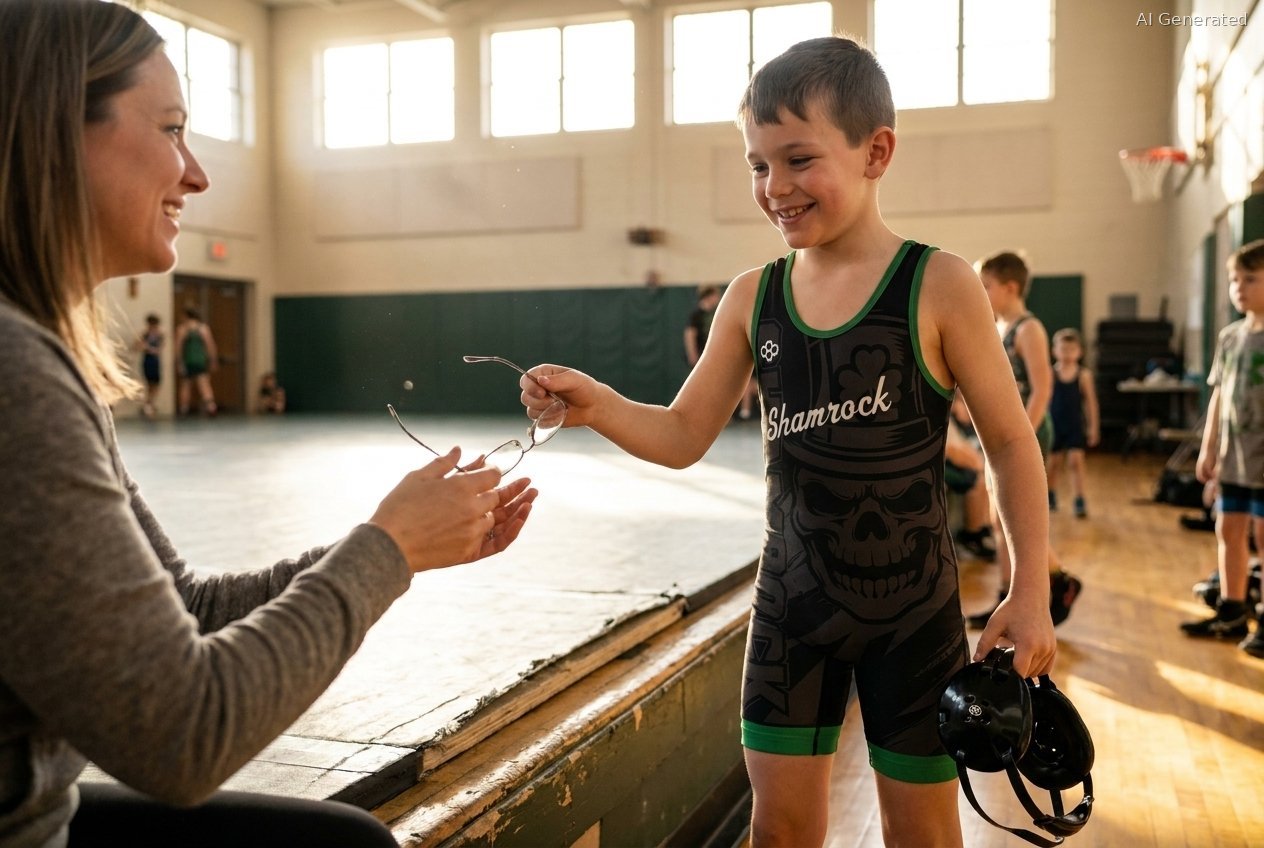
Glasses can’t be worn during live wrestling — they’d break in the first scramble. That worries some parents, but here’s the thing most people don’t realize: wrestling is a close-contact sport. Everything happens at arm’s length or closer. Your kid doesn’t need to see across a field like in soccer or baseball. They need to feel pressure, react to movement, and control ties — none of which depends on sharp distance vision.
Kids with mild to moderate prescriptions typically take their glasses off at the edge of the mat and never think about it again. For stronger prescriptions, contacts are the standard solution once a kid is old enough to manage them — plenty of high school wrestlers compete in contacts every weekend.
What about sports goggles? They’re generally not permitted in competition because anything rigid on the face is a hazard to both wrestlers. If your kid’s vision is a real concern, mention it to the coaches and talk to your eye doctor about contacts. In our experience, this issue resolves itself within the first couple weeks of practice.
Wrestling With Asthma: Common, Manageable, and Often Improves
Asthma is one of the most common conditions in youth sports, and wrestling rooms are full of kids who have it. Wrestling actually suits many kids with asthma better than continuous-running sports do, because it works in bursts: hard effort, then rest. A youth match is three short periods, not forty minutes of nonstop running.
The ground rules are the same ones your pediatrician would give for any sport. Keep the inhaler in the wrestling bag and matside at competitions. Tell the coaches at registration so they know what to watch for. Make sure your kid warms up properly — a gradual warm-up is one of the most effective ways to reduce exercise-induced symptoms, and it’s built into every practice we run.
Many families find that consistent conditioning improves how their kid handles asthma over a season, but that’s a conversation for your doctor, not a wrestling club. Get your pediatrician’s clearance, share the plan with the coaches, and let your kid work. For a bigger picture on how we approach health on the mat, read our post on wrestling safety and injury prevention for youth.
Tell the Coaches Before the First Practice
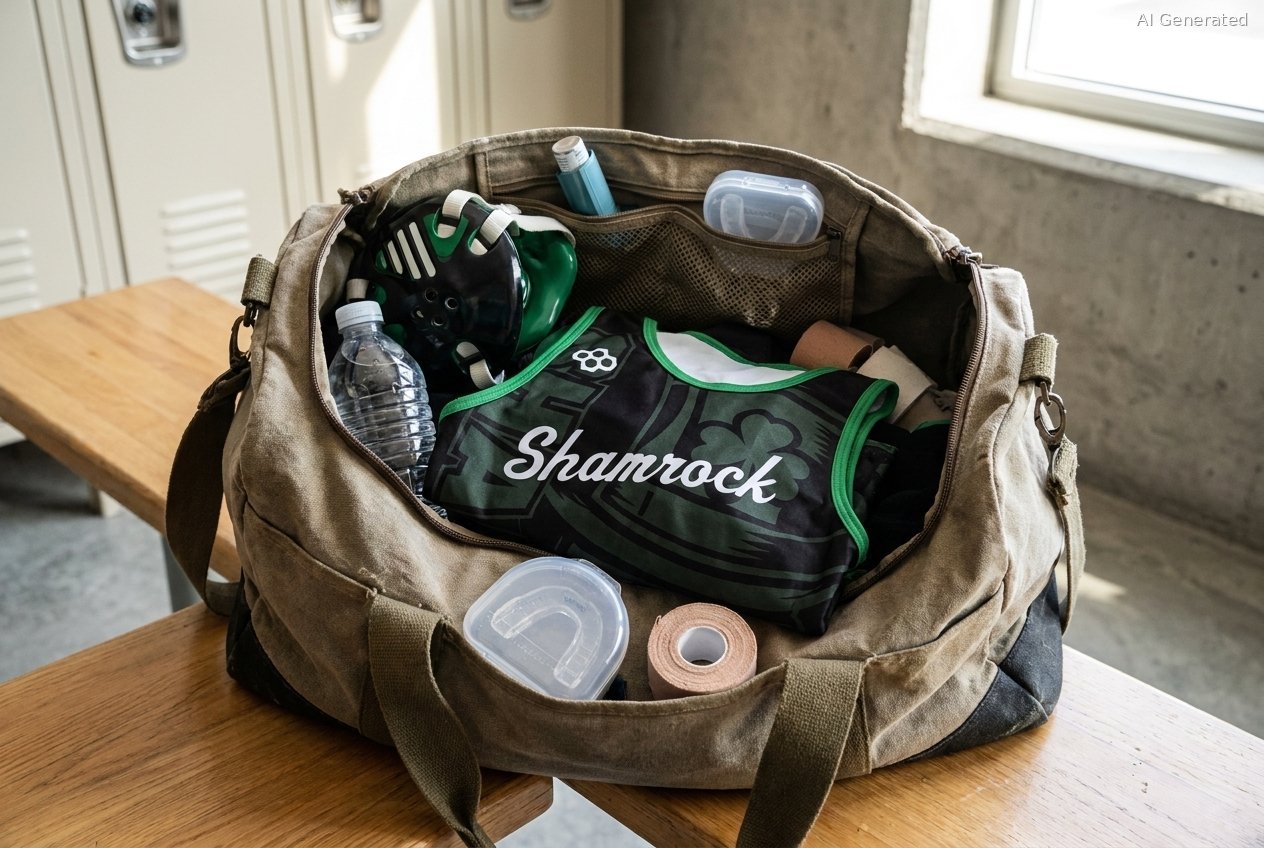
Whatever the situation — braces, asthma, allergies, a past injury — the single most useful thing you can do is say it out loud before your kid steps on the mat. Coaches can’t adjust for what they don’t know about. Once we know, it’s easy: we make sure the mouthguard goes in, the inhaler is within reach, and the warm-up does its job.
If your kid is brand new to the sport, our guide to what to expect at your child’s first wrestling practice walks through exactly how a session runs, so neither of you is guessing.
A Few More “Can My Kid Wrestle With…” Answers
- Skin conditions like eczema: Usually fine with a doctor’s okay. Anything open or spreading needs clearance first — the same standard applied to every wrestler at every event.
- A recently healed broken bone: Doctor’s written clearance, then a gradual return. Tell the coaches which limb it was.
- Hearing aids: They come out for live wrestling, like glasses. Coaches adjust how they communicate — this is more common than you’d think.
- Food allergies: Not a mat issue, but tell us anyway. Tournaments involve long days and shared snack tables.
If you’ve heard that wrestling is too dangerous for kids with any kind of medical consideration, that belongs on the same pile as most secondhand opinions about the sport — we broke those down in 8 common wrestling myths parents believe. And if you have a question we didn’t cover here, check the FAQ or reach out directly.
Come See for Yourself — First Sessions Are Free
The fastest way to settle any of these worries is to watch your kid on the mat. Shamrock Wrestling Club trains youth wrestlers (Grades K–5) Tuesdays and Thursdays from 5:30–6:30 PM, middle and high school wrestlers from 6:30–8:00 PM, and everyone Saturdays from 10:00 AM–12:00 PM. Membership is $100/month for unlimited sessions, or $25 for a drop-in.
Kids in grades K–7 can try it at no cost through our free youth sessions. Bring the mouthguard, bring the inhaler, leave the glasses with you at the edge of the mat — and let them wrestle. When you’re ready, register here.