

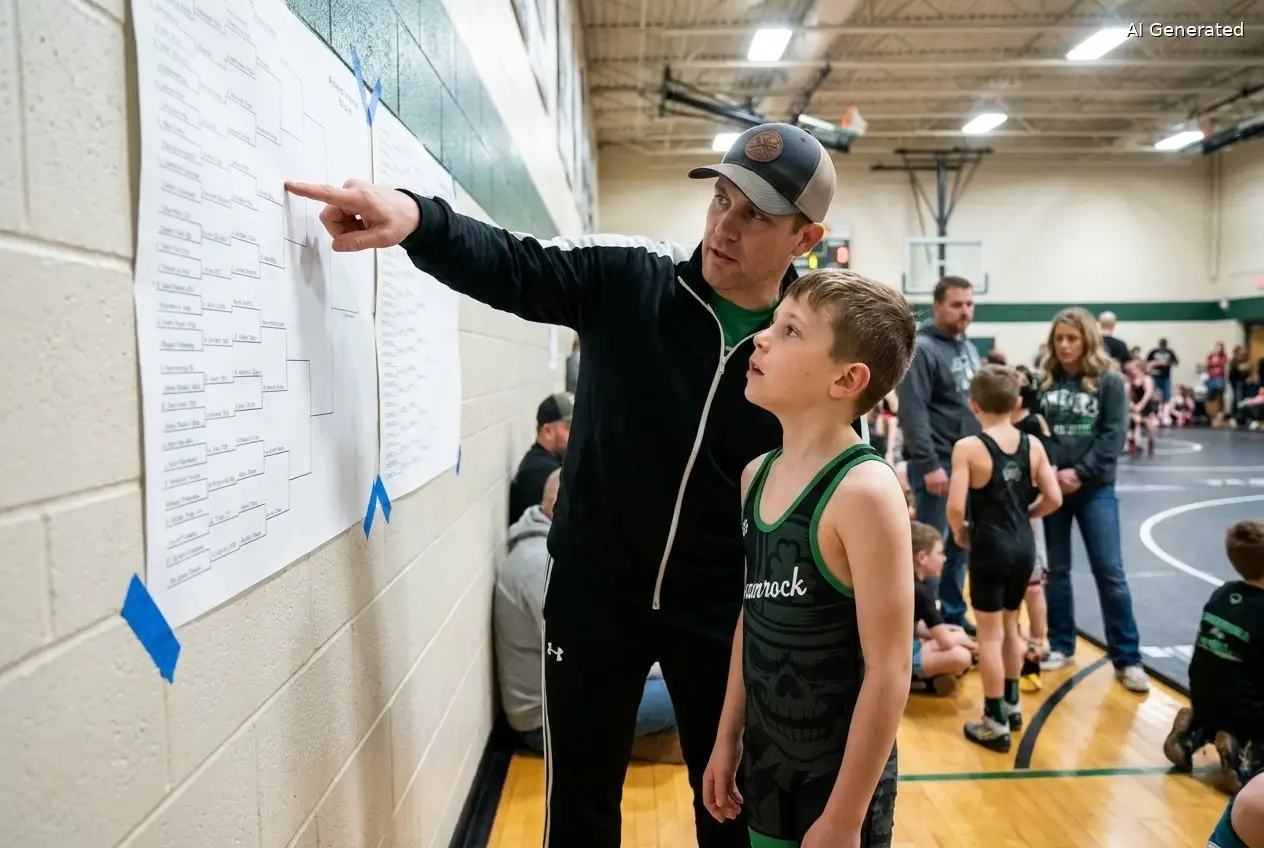
A quick note on the photos: some images in this article are AI-generated and marked “AI Generated” in the corner. We use them to illustrate what we’re describing — so if something in a picture looks slightly off, that’s why. Everything we say about our program, coaches, and schedule is real.
You get to your kid’s first tournament, find the check-in table, and then you see it: a giant sheet of paper on the wall covered in names, lines, and numbers. That’s the bracket. If you’ve never wrestled, it can look like a puzzle nobody handed you the instructions for. This guide breaks down exactly how youth wrestling brackets work so you can follow your kid’s day without guessing.
What a bracket actually is
A bracket is just a map of who wrestles who. Kids are grouped by age and weight, then paired off so the winners keep moving forward. Every wrestler in a bracket is close to the same size, which is why weigh-ins matter so much. If you’re still fuzzy on how kids get sorted, our breakdown of wrestling weight classes covers it.
Most youth brackets have anywhere from three to sixteen kids. The size of the bracket changes how the day runs, but the idea is always the same: win, and you advance to the next line on the sheet.
Round robin vs. elimination brackets
Youth tournaments usually run one of two formats, and it’s worth knowing which one your kid is in.
A round robin is common when a weight class only has three or four kids. Everybody wrestles everybody. Your kid is guaranteed the same number of matches as everyone else, and place is decided by record. This is the friendliest format for new wrestlers because nobody goes home after one loss.
An elimination bracket is the classic tree shape. Win and you move right toward the final. Lose and you either drop out or fall into the consolation side, depending on the format. Bigger weight classes almost always use this style.
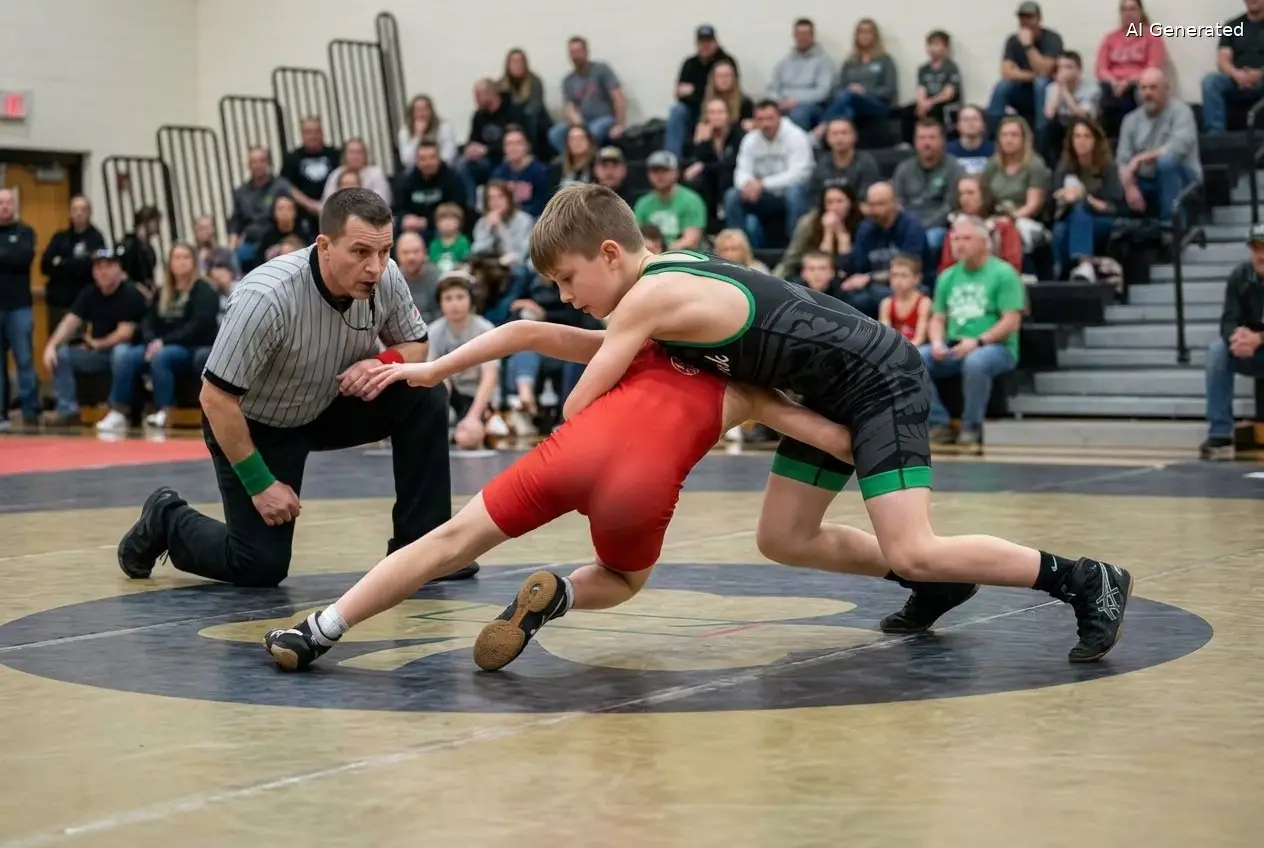
Why one loss usually isn’t the end
Here’s the part that confuses most first-time parents. In a lot of youth brackets, losing one match does not send your kid home. These are called double-elimination brackets, and a wrestler has to lose twice before they’re done.
When a kid loses on the main side of the bracket, they drop into what’s called the consolation bracket or the “wrestlebacks.” From there they can keep winning and still place, usually as high as third. So if your kid loses a tough first match, don’t pack up the cooler. They very likely wrestle again.
This is one of the best things about the sport for young athletes. A bad match isn’t the whole day. It’s a chance to reset and go again, which is exactly the kind of resilience we build in our youth program in Somerset and Fall River.
What a “bye” means
Sometimes you’ll see the word “bye” next to your kid’s name in the first round. A bye just means there was no opponent to fill that slot, so your wrestler advances without wrestling. It’s not a reward or a penalty — it’s math. Brackets are built in sizes of 4, 8, or 16, and when the number of kids doesn’t fill it exactly, some wrestlers get a free pass to the next round.
A bye can mean your kid waits a little longer for their first match. Keep them warm, keep them fed, and don’t let them cool off. Our guide to tournament day prep walks through how to manage the downtime between matches.
How placing works
Placing means finishing high enough to earn a medal, ribbon, or trophy. In most youth brackets, the top four or top six place. The two wrestlers who win their way through the main side meet in the final for first and second. The consolation side sorts out third, fourth, and sometimes fifth and sixth.
The important thing to tell your kid: you don’t have to be undefeated to place. Plenty of kids take a loss early, grind through the wrestlebacks, and still walk out with hardware. That’s a real accomplishment, and it teaches a lesson that sticks.

How to read the bracket at the tournament
When you walk up to the bracket sheet on the wall, here’s what to look for:
- Find your kid’s weight class and age group at the top of the sheet.
- Find your kid’s name and follow the line to see who they wrestle first.
- Note the mat number — matches run on several mats at once, and you need to be at the right one.
- After each match, an official writes the winner’s name on the next line. That’s how you track where your kid goes next.
Once the matches start, understanding the scoring helps you follow the action. Our quick guide to scoring and rules covers takedowns, escapes, and near falls in plain English. And if you want the full picture of how a tournament day flows from check-in to awards, read what actually happens at a youth wrestling tournament.
The bracket is a lesson, not just a scoreboard
Wrestling puts a kid’s name on a wall and lets them earn their way forward one match at a time. Some days they win the bracket. Some days they lose early and battle back for third. Either way, they learn that the result is earned, not given — and that a setback isn’t the end of the story. If your kid comes off the mat frustrated, our thoughts on what to say after a tough loss can help.
At Shamrock Wrestling Club, we coach kids from Somerset, Fall River, and the surrounding southeastern Massachusetts and Rhode Island towns to compete with real technique and a level head. Youth wrestlers (Grades K–5) train Monday and Thursday from 5:30–6:30 PM, with Saturday sessions from 10:00 AM–12:00 PM. It’s $100 a month for unlimited sessions, or $25 for a drop-in.
If your child is ready to get their name on a bracket, register with Shamrock Wrestling Club and come see what a real wrestling room feels like. First-timers are always welcome.