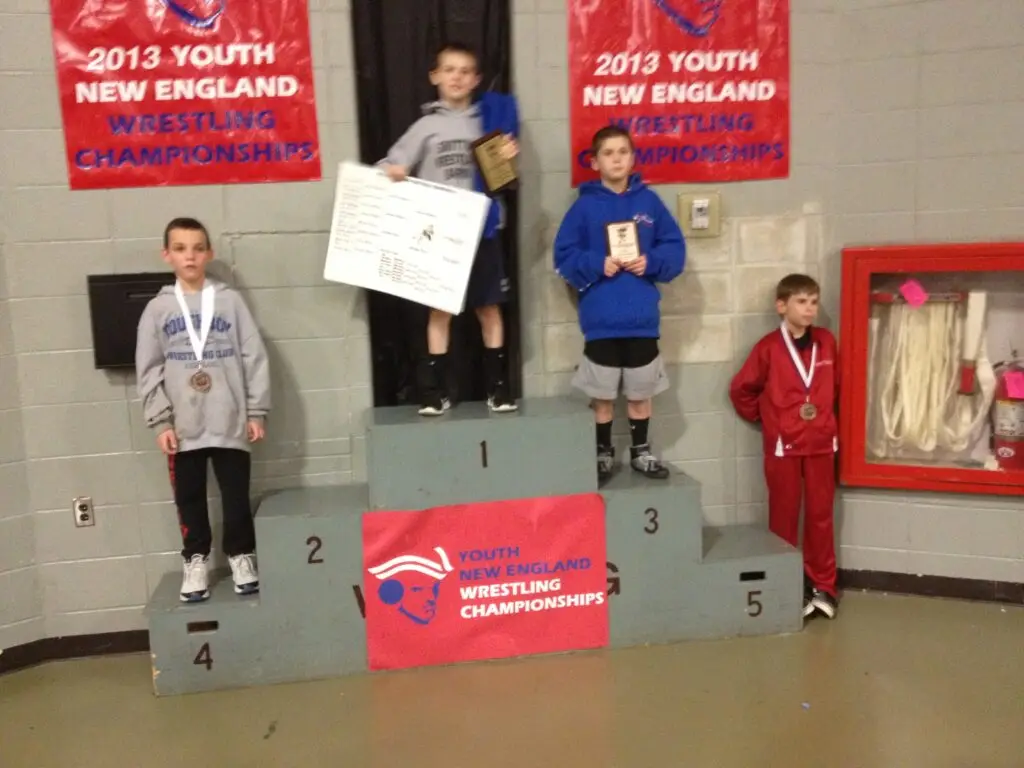
The first youth wrestling tournament is a big moment for any family. Most parents have no idea what to expect — how weigh-ins work, how brackets are run, when their kid actually wrestles, or what they’re supposed to do in between matches. Here’s a straight walkthrough so you can show up prepared and help your wrestler have a good day on the mat.
Before the Tournament: What to Pack
Pack the night before, not the morning of. You don’t want to be hunting for headgear at 6:00 AM.
At minimum your wrestler needs a singlet (or compression shirt and shorts if singlets aren’t required at that age), wrestling shoes, headgear, and a water bottle. Bring a second t-shirt, sweatpants, and a hoodie so they can stay warm between matches. Throw in snacks — bananas, granola bars, peanut butter sandwiches, and plenty of water. Most tournaments have concession stands, but the lines are long and the food is usually junk.
A folding chair or stadium seat is smart. Gyms get packed, and bleacher space disappears fast.
Weigh-Ins
Every wrestler weighs in before competing. At most youth tournaments around Somerset, Fall River, and southeastern Massachusetts, weigh-ins happen the morning of the event, sometimes as early as 7:00 AM. The weight they hit at weigh-ins determines their bracket.
For young kids, weight cutting is not the point. Feed them a normal dinner the night before, a light breakfast, and let them wrestle at their natural weight. If you’re new to the sport and wondering whether your kid is even ready for this, our post on what age kids should start wrestling lays out how we think about readiness at Shamrock.
How Brackets Work
After weigh-ins, tournament organizers build brackets by age and weight. Your wrestler will usually be grouped with four to eight other kids in the same range. Brackets are almost always double-elimination at the youth level — meaning a wrestler has to lose twice before they’re done for the day. Two losses and the tournament is over for them.
Match times are not scheduled precisely. You get a mat number and a bracket, and you watch for your wrestler’s name to be called. It’s the parents’ job to pay attention — kids get lost in the crowd and miss calls all the time.
What a Match Actually Looks Like
A youth wrestling match is usually three one-minute or ninety-second periods. The first period starts on the feet (neutral). The second and third periods start with one wrestler on top and one on bottom (referee’s position), with choice alternating.
Points are scored for takedowns, escapes, reversals, and near-falls (getting your opponent’s shoulders close to the mat). A pin ends the match immediately. If neither wrestler pins, the one with the most points at the end wins.
Most first-time parents are surprised by how fast it all happens. A full match can be over in under 90 seconds. That’s why reps in practice matter so much — and why our youth wrestling program in Somerset and Fall River runs hard, structured Monday/Thursday sessions instead of watered-down rec-league practices.
What Parents Should Do During the Day
This is where a lot of wrestling parents go sideways. Tournament day is not the time to coach. Your wrestler has a coach. Your job is to be a calm presence, keep them fed, hydrated, and warm, and cheer without screaming instructions from the stands.
Yelling moves from the bleachers confuses kids. They hear you, they hear their coach, and they freeze. Let the coach coach. You handle the rest of the day — and the ride home.
Speaking of the ride home: keep it short. “I’m proud of you. You worked hard.” That’s it. Don’t recap every mistake. Don’t compare them to another kid. Don’t make them relive a loss. There’s a time to break down film and there’s a time to let a kid eat a cheeseburger and move on. Tournament night is almost always the second one.
Winning and Losing
Your kid is going to lose matches. Every wrestler does. The best wrestlers in Massachusetts and Rhode Island have all been pinned, cried in the bleachers, and come back the next weekend. Losing is part of the sport, and frankly it’s one of the main reasons wrestling builds character the way it does. We wrote more about that in how wrestling builds confidence and discipline in kids.
What matters is how they respond. A kid who loses, shakes hands, walks off the mat, and gets ready for the next match is learning something most youth sports can’t teach.
Between Matches
Wrestlers might have 20 minutes between matches, or they might have two hours. Keep them warm. Keep them moving a little — not sprinting around the gym, but not sitting frozen on a folding chair either. Light snacks, water, and a hoodie on between bouts. Tournaments are long days. Pacing matters.
After the Tournament
Win or lose, the tournament is a data point. Coaches see what your wrestler did well and what they need to drill. Kids see what real competition feels like. Parents see their kid do something hard in public and walk off the mat on their own two feet. That’s the whole value.
If your wrestler is new to the sport and you haven’t been to a practice yet, a tournament can feel overwhelming. Start with the basics first — come to a session, meet the coaches, and let your kid get comfortable with the room before worrying about brackets. Our post on what to expect at your child’s first wrestling practice is a good starting point.
Train Where It Counts
Kids who show up to tournaments prepared are the kids who train hard in the practice room. At Shamrock Wrestling Club in Somerset, we run youth sessions (Grades K–5) Monday and Thursday from 5:30–6:30 PM, middle and high school from 6:30–8:00 PM, and Saturdays from 10:00 AM to 12:00 PM. Unlimited training is $100/month, and drop-ins are $25.
If you want your wrestler to walk into their next tournament ready, start by getting them into a real wrestling room. Try a free session for K–7 wrestlers, or register for the full program and get them on the mat this week.