
A quick note on the photos: some images in this article are AI-generated and marked “AI Generated” in the corner. We use them to illustrate what we’re describing — so if something in a picture looks slightly off, that’s why. Everything we say about our program, coaches, and schedule is real.
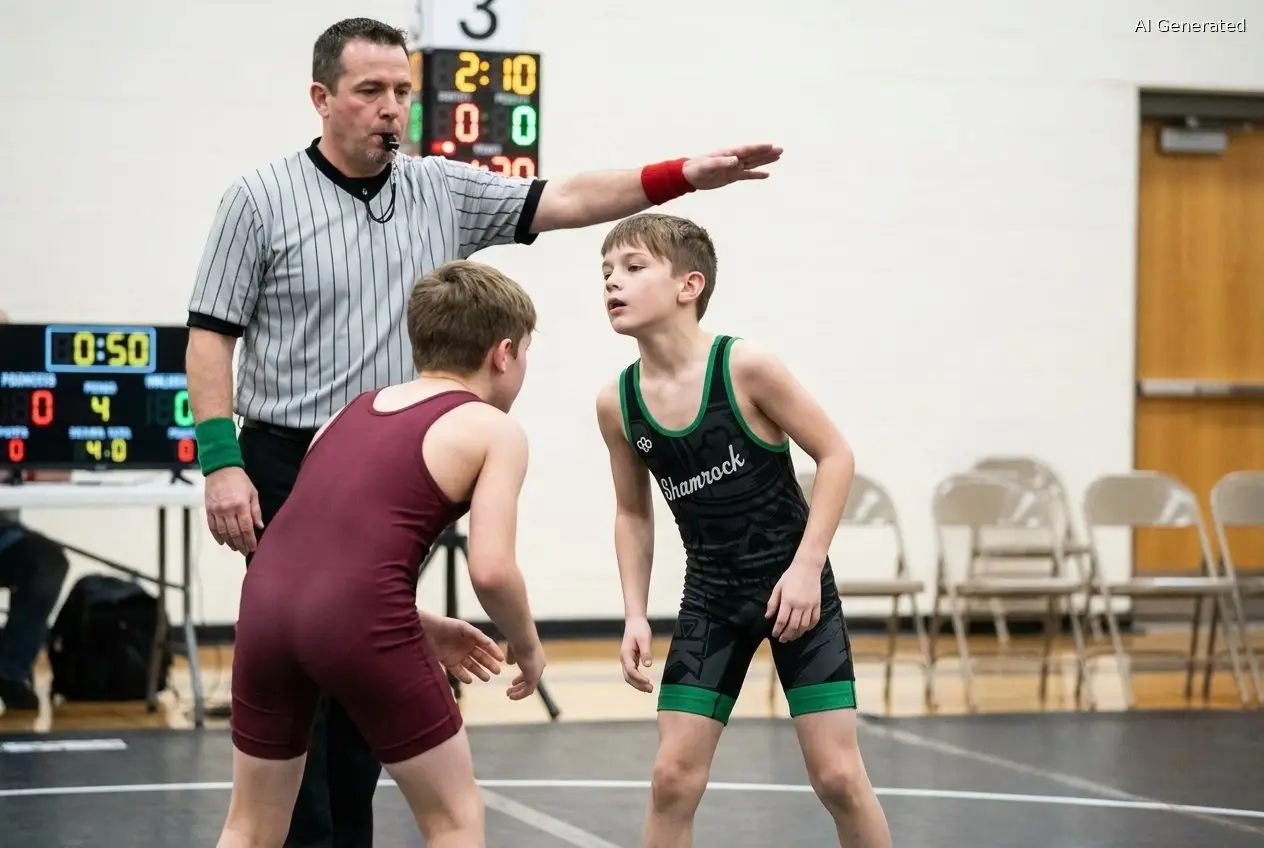
You’re sitting in the bleachers at a tournament in Fall River, your kid is in the middle of a scramble, and the referee blows the whistle and stops everything. No points. No pin. Just a stoppage, a quick word, and both wrestlers back to the center of the mat.
Most parents have no idea what just happened. That’s normal — wrestling officiating is one of the least explained parts of the sport. But once you understand what referees are actually watching for, the sport gets a lot easier to follow, and a lot less nerve-wracking.
Here’s a straight breakdown of the holds referees stop, why the rules exist, and what it means when your kid gets called for one.
Illegal vs. Potentially Dangerous: Two Different Calls
This is the distinction that confuses parents most, and it matters because the two calls carry very different consequences.
A potentially dangerous hold is a legal move that has been taken to the edge of what a joint can safely do. The referee stops the match, resets the wrestlers, and nobody is penalized. It’s a safety pause, not a punishment.
An illegal hold is a move that isn’t allowed at all. The referee stops the match and awards a point to the opponent. Repeat it enough times and it leads to disqualification. It’s usually not malicious — young wrestlers grab what’s available when they’re tired — but the penalty stands either way.
When your kid gets stopped, the first thing to figure out is which of these two it was. One is coaching feedback. The other is just the sport keeping shoulders and elbows where they belong.
The Illegal Holds You’ll Actually See in Youth Wrestling
The full rulebook is long. In a K–8 bracket, though, the same handful of calls come up over and over:
- Full nelson — both arms threaded under the opponent’s armpits with hands on the back of the head. Puts direct pressure on the neck and spine. Always illegal.
- Headlock without an arm — locking around the head and neck without also trapping an arm. It becomes a choke fast. This is probably the single most common illegal hold at the youth level.
- Twisting knee lock — any hold that torques the knee against its natural range. Knees don’t rotate, so this one is called quickly.
- Slam — lifting an opponent and returning them to the mat with unnecessary force. Wrestlers are required to bring an opponent down under control.
- Grabbing clothing, headgear, or fingers — a technical illegality, not a safety one, but it gets called constantly with new wrestlers who don’t yet know where their hands should go.
- Locked hands — on top in the down position, the top wrestler can’t lock hands around the opponent’s body. This is the call parents complain about most, and it’s the one that’s genuinely just a rule about control, not danger.
None of these are exotic. They’re the things a tired ten-year-old grabs when they’re trying to hold on. That’s exactly why coaching them out early matters more than memorizing them.
Why the Rules Are Built This Way
Wrestling has a reputation for being rough, and the rulebook is a big part of why that reputation is mostly wrong. We covered this in more detail in our post on wrestling safety and injury prevention for youth, but the short version is this: nearly every illegal hold in folkstyle exists to protect a joint that doesn’t bend that direction.
Necks, knees, elbows, shoulders. The rules draw a hard line around each one, and referees are trained to stop the action before a bad position becomes an injury — not after.
That’s a real difference between wrestling and combat sports it gets lumped in with. Folkstyle is a scholastic sport officiated by adults whose job is to intervene early. If you’ve been weighing wrestling against other options, our breakdown of wrestling vs. karate, jiu jitsu, and MMA gets into how differently these sports treat submissions and joint pressure.
What It Means When Your Kid Gets Called
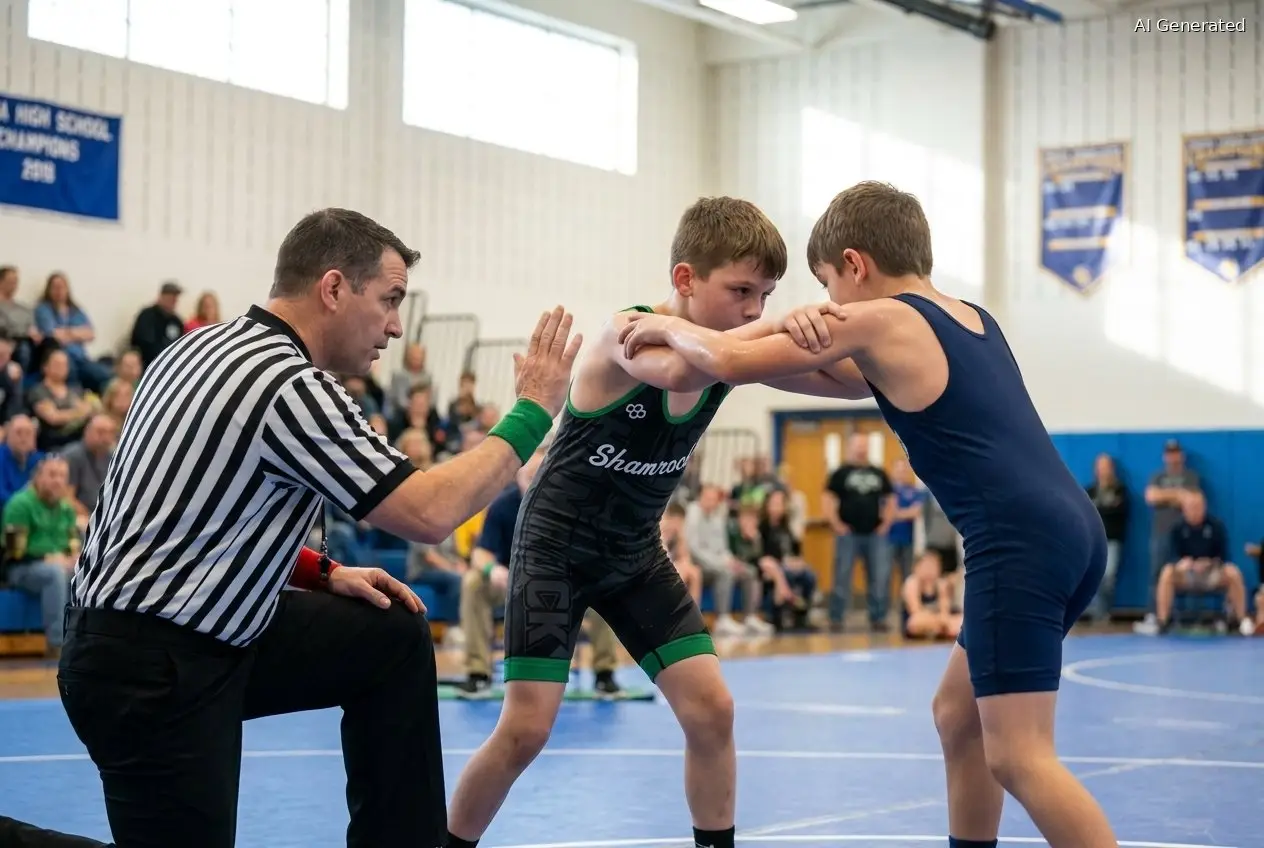
Almost every illegal hold call in a youth match is a technique problem, not a character problem. Your kid was probably out of position, gassed, and reaching.
So the response is straightforward: let the coach coach. Don’t yell corrections from the stands, and don’t argue the call. Officials at youth tournaments are volunteers or near it, and second-guessing them in front of your kid teaches the wrong lesson. Our guide on supporting your wrestler without being “that” parent covers the sideline side of this.
Afterward, keep it simple. “What did the ref say?” is a better question than “what was that call?” One puts your kid in charge of understanding the rule. The other puts them on defense.
How Good Coaching Prevents These Calls
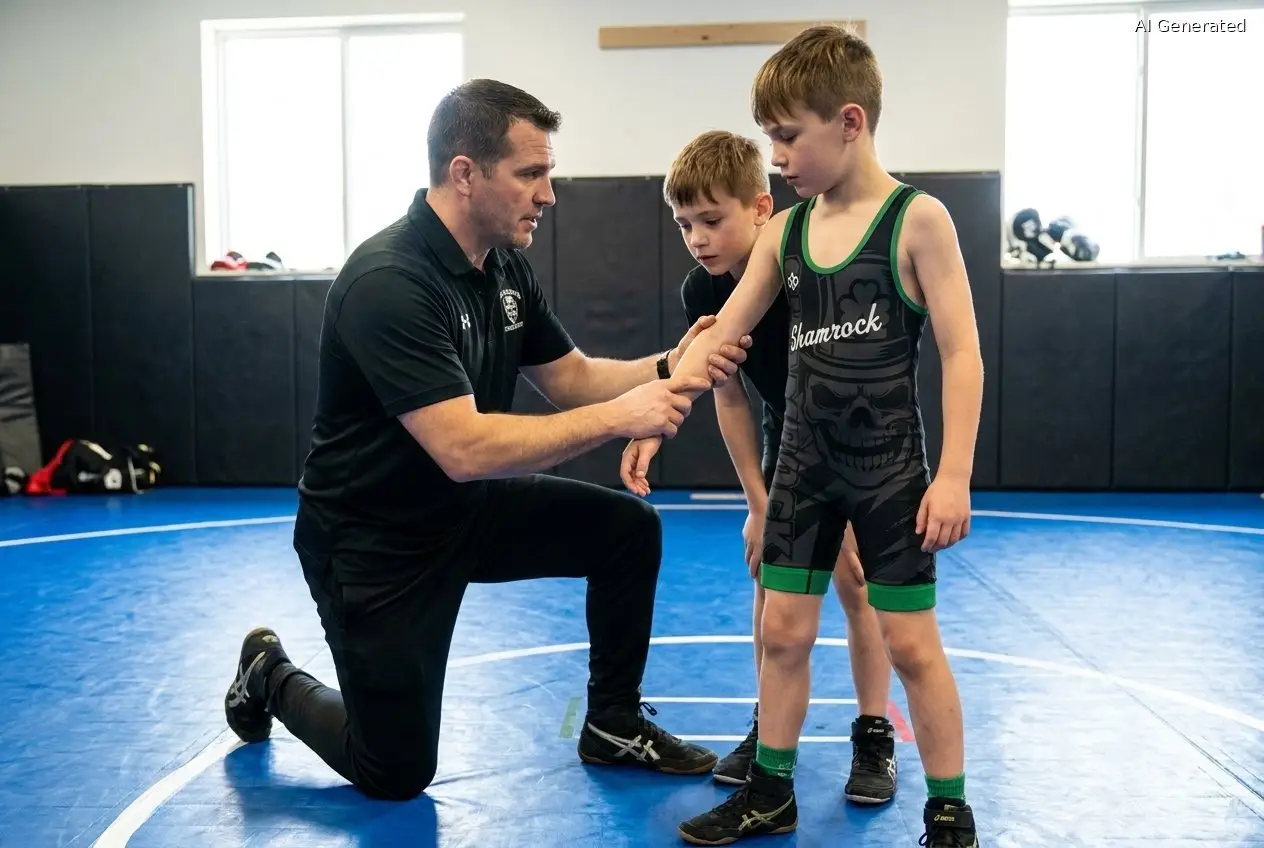
Kids don’t stop grabbing illegal holds because someone read them a rulebook. They stop because they’ve been given something better to grab.
A wrestler who has a real answer from the front headlock doesn’t reach for a headlock without an arm. A wrestler with solid hand-fighting doesn’t end up clutching a jersey. Legal technique isn’t a restriction on offense — it is the offense.
That’s how we teach it at Shamrock. Correct positions get drilled from the first week so the safe option is also the automatic one. It’s the same reason we spend so much time on stance, level change, and hand position with beginners rather than rushing to flashy throws. If you want a sense of what that looks like day one, here’s what to expect at your child’s first wrestling practice.
A Few Calls That Aren’t What They Look Like
Two stoppages get misread by parents constantly.
Stalling. Not an illegal hold at all. It’s a warning for avoiding action, and it exists to keep matches from turning into two kids holding still. It’s a nudge, not a safety issue.
Out of bounds. The most frequent stoppage of the day and the least dramatic. The wrestlers left the mat area, so they reset. Nothing happened.
If you want to follow along with more confidence overall, our guide to what actually happens at a youth wrestling tournament pairs well with this one. Between the two, you’ll understand roughly 95% of what you see at a Saturday tournament.
Come See How We Teach It
The best way to understand how seriously wrestling takes safety is to watch a practice. We train year-round in Somerset, and we pull athletes from Fall River, Swansea, Westport, and across the East Bay in Rhode Island.
Practices run Monday and Thursday — grades K–5 from 5:30 to 6:30 PM, middle and high school from 6:30 to 8:00 PM — plus Saturdays from 10:00 AM to 12:00 PM. Membership is $100 a month for unlimited sessions, and drop-ins are $25.
If your kid has never stepped on a mat, start on our youth wrestling page for Somerset and Fall River — no gear required for a first practice. When you’re ready to sign up, head to wrestling registration for Somerset and Fall River.