
A quick note on the photos: some images in this article are AI-generated and marked “AI Generated” in the corner. We use them to illustrate what we’re describing — so if something in a picture looks slightly off, that’s why. Everything we say about our program, coaches, and schedule is real.
Weigh-ins are the first thing that happens at a youth wrestling tournament and the part new parents understand the least. You walk into a gym at 7:00 AM, somebody points you toward a line of kids in singlets, and there’s a scale, a table, and a guy with a clipboard. Nobody explains the process because everyone around you has done it fifty times.
Here’s the whole thing, start to finish, so your first one isn’t a guessing game.
What a weigh-in is actually for
A weigh-in does one job: it confirms what your kid weighs on the morning of the event so the tournament can group them with kids the same size. That’s the entire purpose. It is not a test, not a judgment, and at the youth level there is no penalty for weighing whatever your kid happens to weigh.
Most youth tournaments in Massachusetts and Rhode Island use what’s called a scratch weigh-in — whatever the scale says is the number they use to build the bracket. Nobody is trying to make a specific number. Your kid steps on, the number goes on the sheet, and they get placed in a group with kids near that weight.
What actually happens, step by step
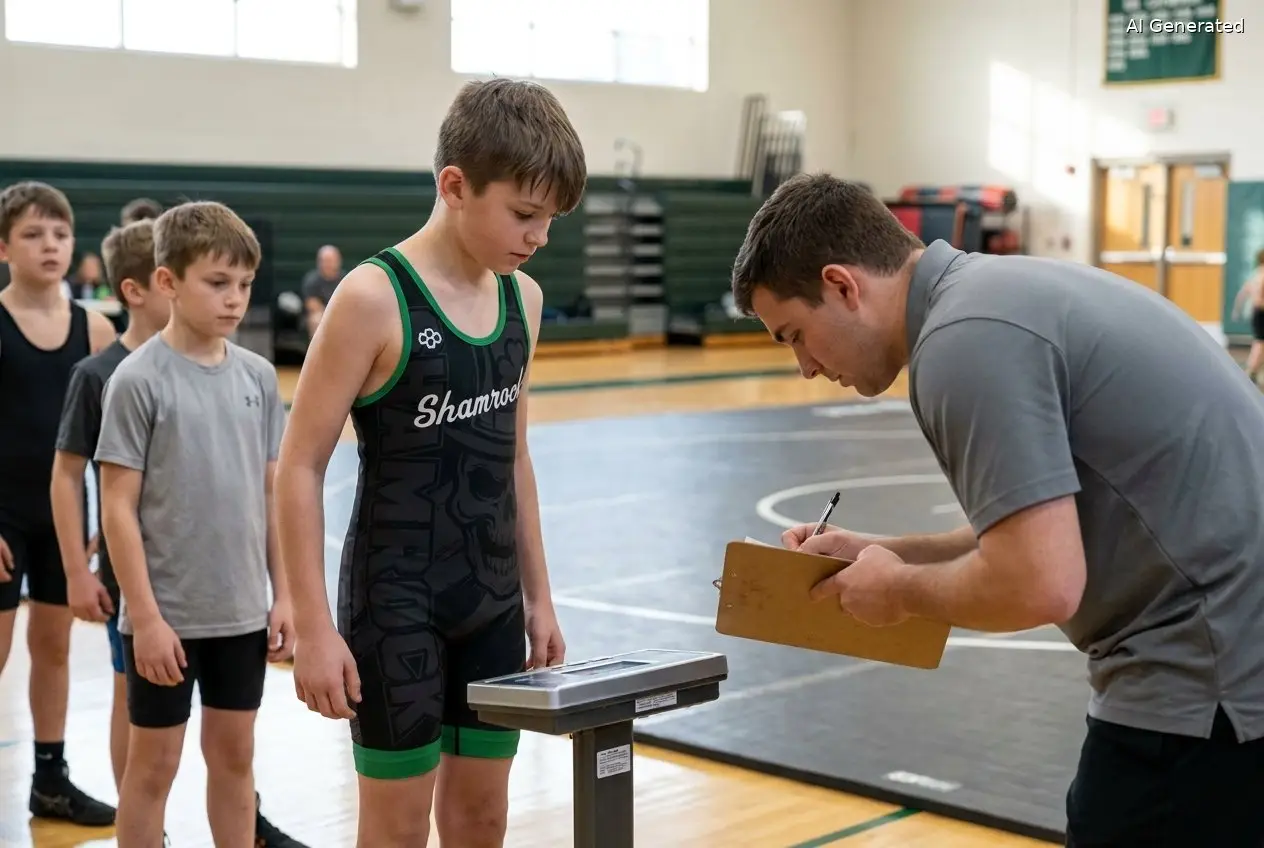
The order changes slightly from event to event, but it almost always looks like this:
- You check in at the registration table and confirm your kid is on the roster.
- Your wrestler gets in the weigh-in line, usually sorted by age group.
- A coach or official does a quick skin check.
- Your kid steps on the scale and someone records the number.
- That’s it. They go find a spot in the stands and wait for brackets to post.
Start to finish it takes about ninety seconds. The waiting in line is the long part. Once brackets go up on the wall, the day really starts — our guide to how youth wrestling brackets work walks through what those sheets are telling you.
The skin check is not a formality
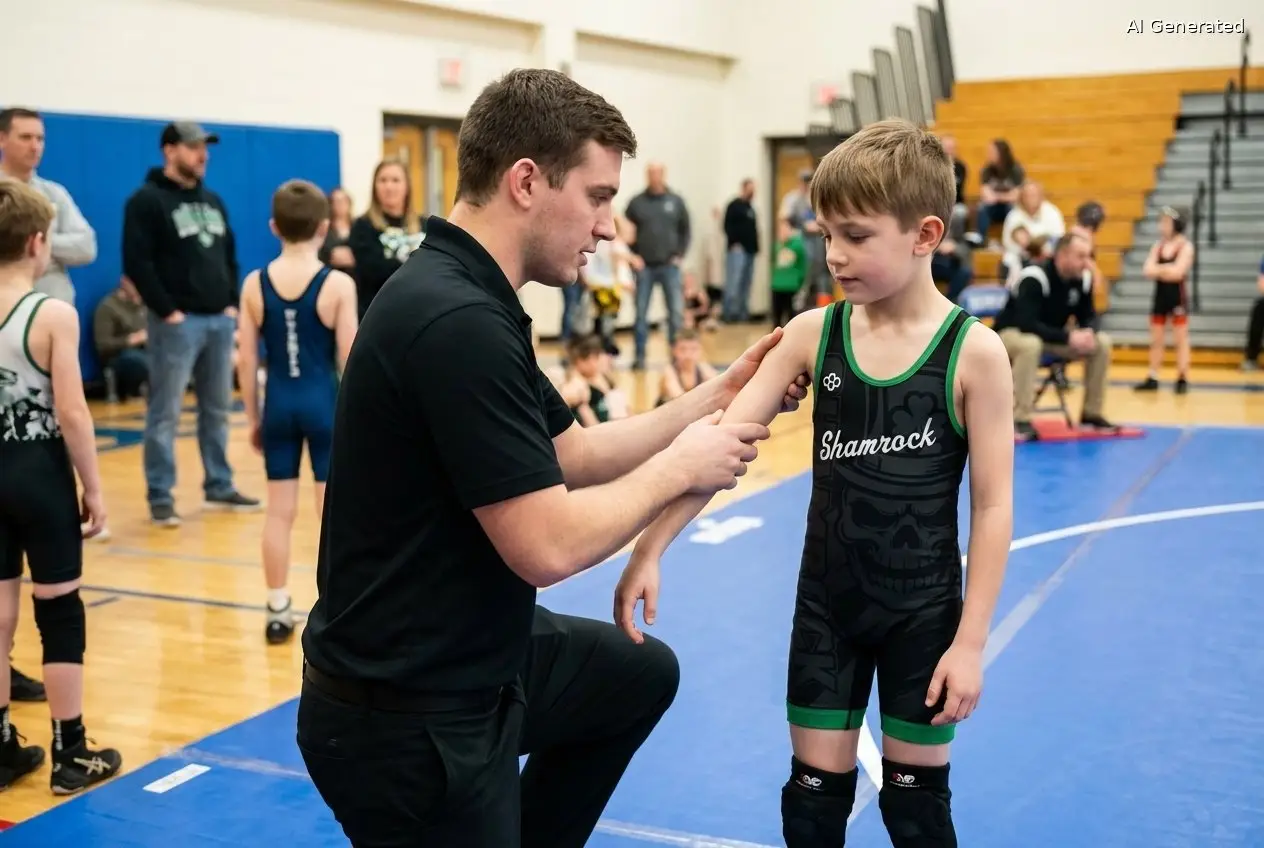
Before your kid gets on the scale, someone looks at their arms, neck, face, and legs. They’re checking for ringworm, impetigo, staph, and open cuts. Wrestling is skin-to-skin, and one untreated spot can run through an entire room in a week.
Two things parents need to know here. First, if your kid has a rash, deal with it during the week — not in the parking lot Saturday morning. A doctor’s note clearing a healed spot is worth having in your bag. Second, if an official pulls your kid for a skin issue, don’t argue. They’re protecting every other kid in the gym, and yours will be back the following weekend.
Cover any bandage completely and make sure it’s secure. We go deeper on keeping kids healthy through a season in our post on wrestling safety and injury prevention for youth.
What your kid should wear on the scale
At most youth events, kids weigh in wearing their singlet. Some tournaments allow shorts and a t-shirt, some allow just shorts. The entry information will say, and if it doesn’t, ask your coach the week before rather than guessing at 6:45 AM.
Practical version: have your kid wear the singlet under warmups to the gym. They stay warm, they’re already dressed for the scale, and nobody is looking for a locker room in an unfamiliar school. If your family is still building out the bag, our youth wrestling gear guide covers what actually matters and what you can skip.
Weigh your kid at home first
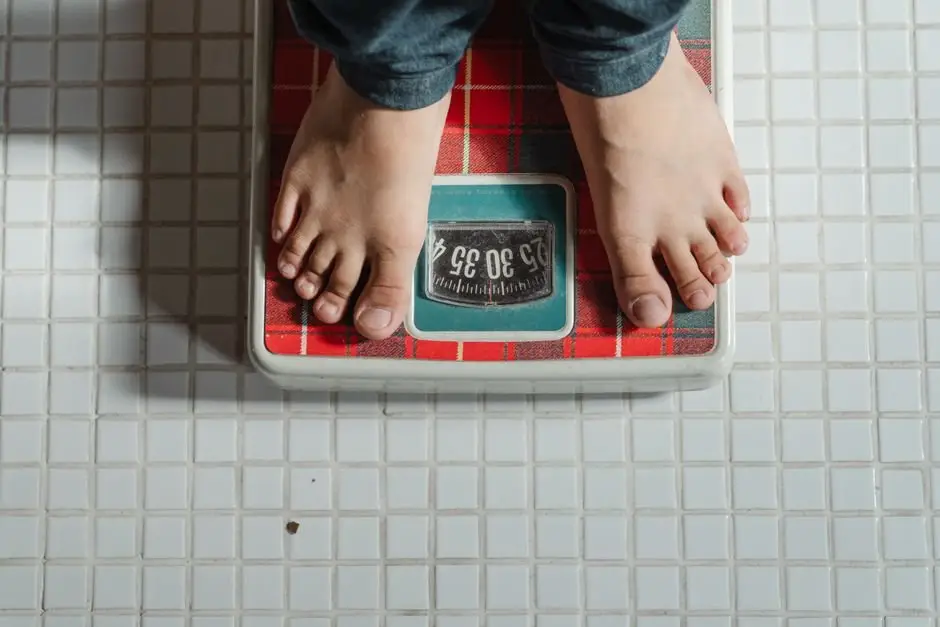
Step on the bathroom scale a couple of days before the tournament so you know roughly where your kid lands. Not to manage it — to avoid surprise. It also helps you register at the right weight when you’re signing up for tournaments, since most entry forms ask for an estimated weight.
Keep the tone flat when you do it. “Let’s see where you’re at for Saturday” and move on. Young kids take their cues from how their parents talk about the number, and a scale should be about as emotional as a shoe size.
Nobody is cutting weight at the youth level
We’ll be blunt about this because it’s the thing parents worry about most. Kids in our K–5 and middle school groups do not cut weight. Not at Shamrock, and not at any club worth sending your kid to. Skipping meals, sweating in extra layers, or restricting water to hit a number is out of the question for a growing athlete.
A young wrestler who shows up hydrated and fed wrestles better in their third match than a kid who scraped down two pounds and has nothing left. Feed them normally the night before, feed them light in the morning, and let the scale say whatever it says. Our tournament day meal plan lays out exactly what that looks like.
Weight management becomes a real conversation in high school, with a coach involved and rules built around it. It has no place in elementary school wrestling.
A short list of things that go wrong
- Showing up late. Weigh-ins close at a hard time. Miss it and your kid doesn’t wrestle, full stop. Build in thirty extra minutes for parking and finding the right gym door.
- Forgetting the USA Wrestling card or registration confirmation. Have it on your phone before you leave the driveway.
- A big breakfast right before the scale. Not a rules problem, just an uncomfortable one. Eat light, eat again after.
- Untrimmed fingernails. Officials check, and a kid can get sent back to the line for it. Trim them Friday night.
- Making the number a big deal. The fastest way to make a nine-year-old anxious about a scale is to act like the scale matters.
What parents should do while it’s happening
Get your kid in line, hand them off to the coach, and go find seats. You do not need to stand at the scale. Coaches handle the line, and a wall of parents crowding the table slows the whole thing down for everyone behind you.
Once weigh-ins wrap, brackets get built and posted, and the tournament runs from there. If you’ve never sat through a full one, what happens at a youth wrestling tournament covers the rest of the day — mat assignments, waiting between matches, and when you can finally leave.
Come train with us in Somerset
Shamrock Wrestling Club runs out of 120 Slades Ferry Ave in Somerset, MA, and pulls families from Fall River, Swansea, Somerset, and across the East Bay in Rhode Island. Youth (Grades K–5) trains Monday and Thursday from 5:30 to 6:30 PM. Middle and high school runs Monday and Thursday from 6:30 to 8:00 PM. Saturday training is open to all ages from 10:00 AM to 12:00 PM.
It’s $100 a month for unlimited sessions, or $25 for a drop-in if you want to see the room first. We’ll get your wrestler ready for tournament season the right way — conditioned, coached, and confident on the scale and off it. Learn more about our youth wrestling program in Somerset and Fall River, or register your wrestler and get started this week.